8th lv spell scars just to clear up any misconceptions, the scars are for the person who is hit by the spell unless ive written ‘extended use’ next to the spell
It seemed like a good idea at 4am. Anyways, here’s a quick fantasy insult table for when you don’t have a witty line prepared. The ‘Son of a” tables are based off of Shakespearean insults.
Tag your weird combos? I have no clue what else to use this for.
it’s kind of mind-boggling how many action scenes out there (including sex scenes) are straight-up boring. that is the opposite of what an action scene is supposed to be. so here’s a little how-to, for those who have trouble with action.
(standard disclaimer: all writing processes are different, my way is not the only way, if it doesn’t work for you that doesn’t mean there’s anything wrong with you or your work.)
step 1: decide what your action scene needs to accomplish plot-wise and character-wise. if the answer is nothing, scrap the scene.
step 2 (optional): if you’re the kind of writer who needs to write a crappy first draft before you can do anything productive with a scene, write your crappy first draft.
step 3: break down the scene into a bulleted outline of everything that happens in sequential order, and make sure there’s a “therefore” or “but” relationship in every transition. every action should either be caused by the previous action, or interfere with it. no “and then” relationships.
step 4: check your outline against the results of step 1.
step 5: stick an exclamation point on every sentence of your outline. if it doesn’t deserve an exclamation point, either cut it or make it more exciting until it does.
step 6: write the scene from that outline. do not use any exclamation points (except in dialogue, sparingly).
step 7: check your finished scene against the results of step 1. all good? high-fuckin’-five, send it to your beta.
the best thing about posting writing tips on tumblr is all the people tagging it “thank you!” writing tumblr is so darn sweet ❤
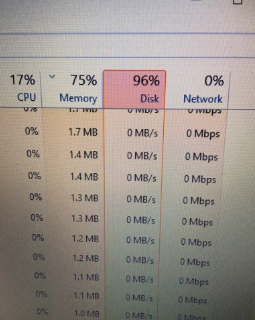
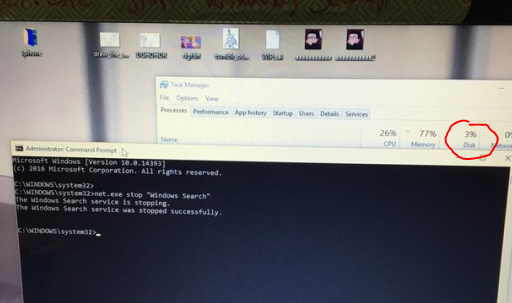
y’all didn’t even add a tutorial of how to do this so imma put one right here
1. type in cmd.exe into your windows search and right click on Command Promt search result and select “Run as Administator”. 2. Type/Copypase in
net.exe stop “Windows Search” and make sure Windows Search is in quotations. It should then respond saying “The Windows Search service is stopping” and then tell you it’s stopped.
This is only a temp fix though, if you want it switched off permanently then do THIS:
1. Press the Windows key + R at the same time and type in services.msc.
2. Scroll until you find Windows Search and double click it to enter its Properties window.
3. Change the Startup type to Disabled. Apply this change and you can exit out.
All information is taken from in-game
item descriptions, codex entries, war table missions, and extended lore
material (such as the RPG book.)
Three unnamed “rare bulbs”: Used for distilling potions and salves. Found in the
Frostback Mountains.
Amrita Vein:
The roots are one of the only sources of water in the deserts in which it
grows. It is a component of many elemental resistance potions.
Arbor Blessing:
Can only be found in the wild, as it is difficult to cultivate. It has a wide
range of uses when combined with other ingredients, (from confusion, to
healing,) but not on its own.
Deathroot: For
centuries the Chasind have used distillation of deathroot bulbs to induce vivid
hallucinations in which they seek mystic knowledge, as an alternative to the
Fade. It can also be used as a sleep aid. On the opposite end, concentrated,
deathroot extract is severely poisonous and a favourite tool of the Antivan Crows.
There are two kinds of Deathroot: Arcanist Deathroot, the common kind, and Lunatic’s
Deathroot, which has the severe effect of hallucination-driven fits of rage.
Deep Mushroom:
Chewing on deep mushrooms can help regain vitality/stamina. Deep mushrooms are
found underground, near lyrium veins. The Dwarves of Orzammar farm them and
regularly include them in their food. This is far safer than their other way of
acquiring it, which is to send the Casteless into the Deep Roads to search for
them amidst the Darkspawn. Like elfroot, there are actually a number of
different kinds of Deep Mushrooms: Blightcap, Ghoul’s Mushroom, and Brimstone
Mushroom being poisonous.
Dragonthorn:
Adding dragonthorn leaves to a potion can help enhance and stabilize other
ingredient properties.
Elfroot: The
primary ingredient in most healing potions and salves. Rubbing the juice of the
roots over a wound will numb the pain and speed up the healing. Chewing on it
can help with a number of common ailments, such as headaches, indigestion, and
hoarse throats. It is extremely common throughout Thedas. Also known as canavaris, there are actually a number
of different kinds of elfroot: Bitter, Gossamer, and Royal Elfroot.
Embrium: Has a
healing fragrance that helps with diseases of the lung. (Possibly asthma?)
There are two kinds of Embrium: Salubrious and Dark, the later having magical
properties.
Felandaris:
Elvhen for “Demon weed.” Felandaris only grows where the veil is thin. It can
be added to elemental resistance potions.
Felicidus Aria:
An extremely rare flower with roots that are the key component to Ambrosia. It takes dozens of plants for
just a small vial.
Foxite: When
distilled, can be used as a concentrator to strengthen the effects of healing
potions and salves. (As well as poison.) Common in Ferelden.
Heatherum:
When distilled, can be used as a concentrator to strengthen the effects of
healing potions, poultices and salves. (As well as poison.) Common in Ferelden.
Madcap Bulb:
Consuming or inhaling in a mist form causes confusion.
Prophet’s Laurel: A long-time known healing herb used in poultices, tinctures, and
incense.
Rashvine: Can
be used in salves that harden the skin and gives elemental resistance. Causes
itchy, red sores when coming in contact with skin on its own. If its poison
gets into the blood, it causes calcification and turns the skin grey. It is
commonly found in patches throughout marshes.
Rashvine Nettle:
While the plan burns the skin, it has no effect on the tongue. It also has no
taste. It is the main ingredient in dispelling grenades.
Redmoss: Grows
in the Wandering Hills and possesses restorative properties when dried, but
must be paired with silverite and elfroot extract to counter fatal toxicity.
Spindleweed: A
palliative herb, commonly used in a folk remedy for helping the physically and
mentally ill in relation to age. It is also used in a “new type of healing
salve” to help treat wounds caused by demons.
Vandal Aria: A
relative to Felicidus Aria. It is the only plant that can grow in blighted
land, and as such may possess taint resistance?
Witherstalk:
The sap is widely used as a contraceptive, but only effective when fresh. It can
also be used in elemental resistances, and to increase the effectiveness of
confusion poisons. Witherstalk can only be found in desert areas.
I was happy that witherstalk was explicitly mentioned as a contraceptive herb, but then stymied that it’s a rare one. It only grows in desert areas and is listed as one of the ‘rare’ tier by DAI’s herb system. Where is the contraceptive herb that can be grown in a house’s backyard, or in a flower pot on the windowsill, or *at least* can be commonly sold at markets?
So today my players encountered a travelling trinket salesmen who had a strange variety of goods on sale. I had fun coming up with random minor magical items, so I thought I would share them.
Trick Coins – Always land on the same side no matter how many times you flip them. Don’t get caught using them to gamble.
Magic Buttons – Can never be lost. Even if they fall off your garment, they will reappear in your pouch or pocket the next day.
Ghost Torch – The smoke from this torch makes ghosts visible.
Magical Dye – These pigments can recolor almost any object.
Alluring Pinecone – I stole this item from Oglaf because I think it’s great (nsfw link). I of course did not introduce it in so vulgar a fashion.
Cat Seeds – Magical seeds that if planted and cared for will grow into bulbs that will eventually bloom as kittens. These kittens are like normal cats in most respects except that they don’t hunt and subsist on sunlight and water rather than food.
Unbreakable Thread – Sewing thread that can’t be broken. Lone exception to the “You break it, you buy it” rule of the store.
Demon Tears – Small crystalline stones that will strike fear into the hearts of those that are struck by them.
Charming Cufflinks – Gives a small bonus to diplomacy with folk of the opposite gender.
Elven Earrings – When worn, they give the illusion that you have elf ears.
Magical Umbrella – A hands free umbrella that floats above you when it rains and is not affected by wind
Fish Whistle – A whistle that drives fish mad and will cause them to literally leap into your boat or on shore.
Magic Chalk – Can write on any surface, even non-solid ones. To erase, simply wipe it off with your hands.
Hate Spice – A seasoning which will cause the food to taste terrible to anyone who hates the cook.
Magical Jelly Molds – Can either cook or freeze jelly like substances that are placed within them instantly.
Password Protected Coin Purse – Can only be opened if you know the password
Kinstone – Vibrates when relatives draw near. Useful alarm system for in-laws.
Water Magnet – Water is magnetically attracted to this unassuming chunk of metal
Lying Lipstick – Gives the wearer a small bonus on Bluff checks.
Actually you know what. Just don’t mow. Get rid of your lawnmower. Turn your whole yard into a wildflower field or an edible garden. Lawns are the invention of the upper class to show wealth through wasted plots of grass that is meticulously tended for no reason other than to be grass. It’s literally an empty plot of land they kept because they had so much money they didn’t need it to grow food. Not using a yard as just a yard is an act of rebellion.
One of the main industries still supporting lawns is chemical pest control companies, and they’re also responsible for the insecticides that crashed the bird populations in the 40s and 50s as well as a lot of what’s killing bees and butterflies now. The herbicides they produce specifically targets “bad” plants like dandelions, buttercups, and clovers, which are plants bees rely on for early spring feeding. Grass is just grass; it would be great for feeding small mammals if people would let it grow more than three inches, but they won’t.
So, yeah. Kill lawnmower culture. Plant some native flowers. Grow some vegetables and fruit trees. Put out bird feeders and bee sugar spots and homes for both. Be kind to bugs and birds and rabbits and opossums and whoever else might wander by. Make your neighborhood a lot more beautiful.
I can be evicted for not mowing, so my alternative is to tear out the grass (itself an invasive species planted by the owner) and replace it with low growing native ground covers. In my area, that means certain species of white clover, and alpine strawberries.
Lawn tearing is a hugely involved project that has pressed my entire household to the limits of our disabilities, however.
For most people, the best choice is “overseeding.”
This is a technique wherein you acquire enough seed for the replacement ground cover to do the entire space 2-3 times, and seed the lawn area thoroughly enough that the grass simply cannot compete with the sheer number of other plants.
To learn about local ground covers and flower mixes for your area, try contacting the farmers associations and agricultural boards nearby. FFA and the 4H are both happy to provide this info.
To buy the seed in large quantities, be prepared to shop from a farm supply chain. While flowers will usually need to be purchased from a garden supplier, ground covers such as clover and rye are best bought from the fallow field or grazing pasture sections of farmer supplies. This will ensure you get the large quantities needed for over seeding at the lowest possible price.
White clover in particular is native to give swaths of the US and Canada (please check your local area though), and for lawn replacement over seeding, you want 10lbs of seed per acre.
If you have pulled your lawn, you can get away with 5 lbs per acre.
Mix in a local wild flower collection with your cover clover and you’ll have a flower field yard that is truly spectacular in short order.
If you’re not at risk of fines or eviction for having ground cover over 6 inches, then you can simply aerate your yard, throw down the flower seed, and let it go wild.
If you have the time and patience and energy, a more traditional lawn replacement- one more closely reassembling the neighbors lawn and garden rather than a wild lot – will be “xeriscape” areas made with local species. Xeriscape is a style of yard designed to use no irrigation, while still remaining pretty, alive, fertile and active. Most tea and culinary herbs grow very well in xeriscapes, but fruits and vegetables tend not to get enough water to produce well.
If you have a way of irrigating, such as large rain barrels or a cistern, a high water table, a stream spring or pond on your property, or just regular and thorough soaking rain interspersed with strong sunlight and sun exposure, a fruit and vegetable garden is very rewarding as well, but it will require constant maintenance that your xeriscape or flower field will not.
If you get Heritage flowers that will reseed themselves, the flower field will require effectively no maintenance after planting. A xeriscape should be touched up every season, or thoroughly pruned and maintained once a year.
An edible garden, however, is an often daily commitment.
The easiest place to start is local berries. Whatever berries grow (or grew) wild in your area. Berry bushes are extremely low maintenance, but when they fruit, you should try to pick the fruit relatively quickly. Otherwise it will draw ants, flies, and other unpleasantries to your yard and, if the bushes are near the house, into your home too.
The next lowest intensity plants would be fruit trees and fruit vines. Again, these need to be determined by your climate. In Florida, for example, oranges and passionfruit are great choices. In Pennsylvania, apples and grapes will do better.
Run the vines along the property fence if you have one, or trellis them up a sun-facing wall of your home.
Fruit trees need full sun exposure, and have very individual planting requirements based on the age, type and size of the tree. The store where you purchase the tree will provide you with detailed information.
As for more traditional vegetable garden content, all of it will be more work and commitment than the fruits listed through here, but the easiest place to start is with vining vegetables such as cucumber and squash. Leafy greens, tomatoes and tomatillas are also very beginner friendly!
However, greens grow best in the cooler, dimmer early spring and late fall seasons.
Onions and potatoes that went to sprout in your kitchen will grow easily, but getting a good harvest from them is more tricky, so leave that until your second year when you are more confident in your skills. That said, potato and onion flowers are quite pretty, so feel free to let them grow!
If you’re interested in a good reference book for designing and dealing with an eating garden as a yard replacement, Half Acre Homestead is a hugely valuable book.
For xeriscapes, because they vary so hugely by location, you’ll want to stick to local information sources : your local gardeners guild, the future farmers association, 4h, and the local agricultural oversight board. All of these people are hugely passionate about plants and the environment, and will be invaluable resources.
Additionally, they will know who has the best rotten hay and animal manure for mulching and composting.
This for longer than I meant it to, but hopefully it will help you get started on destroying lawn culture and getting more in touch with the local environmental community!